Securing a professional pest control service in San Antonio stops scorpions, subterranean termites, native wood roaches, and rodents before they breach living areas. Residential structures throughout Bexar County require specialized perimeter barriers engineered to withstand extreme South Texas summer heat, protracted drought intervals, and shifting limestone soil profiles.
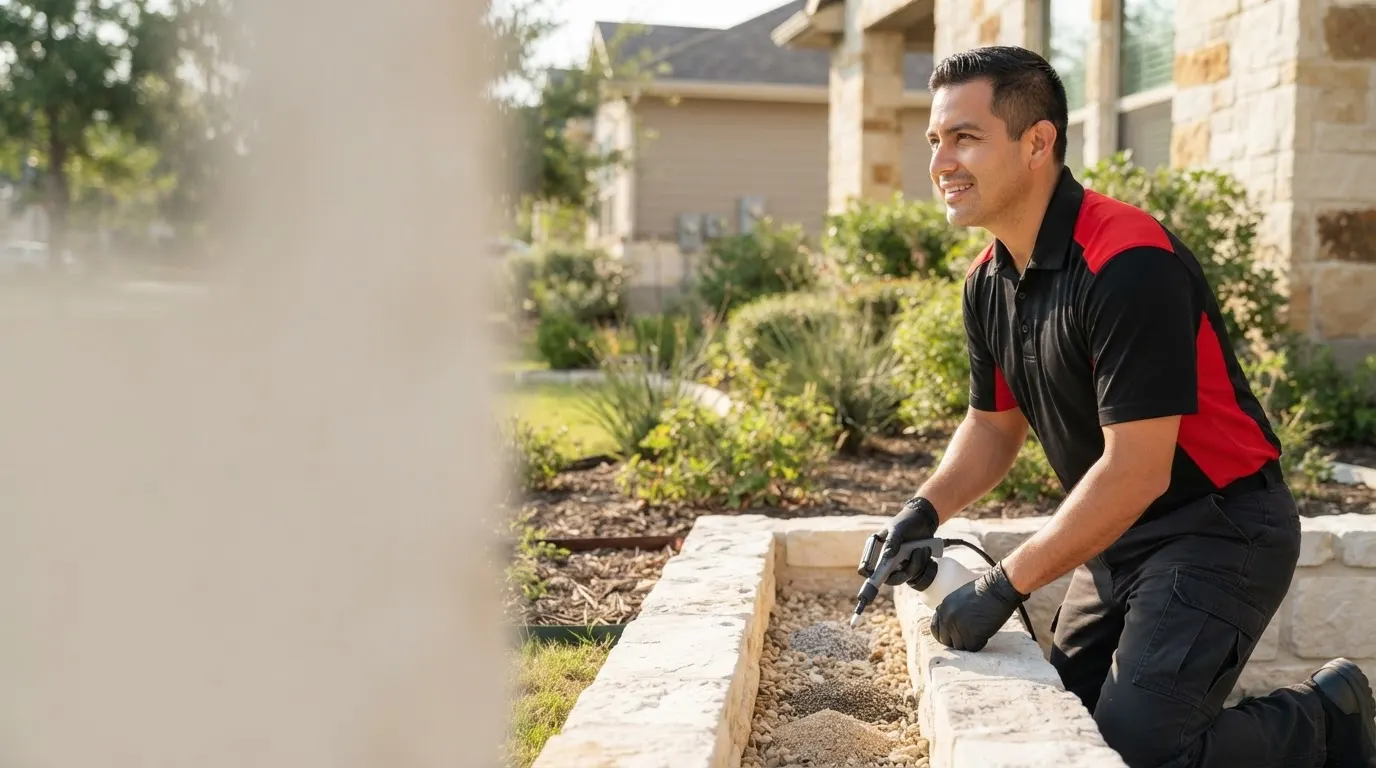
A pest control service in San Antonio is an integrated pest management and perimeter exclusion solution that creates a physical and chemical barrier around residential structures to eliminate local insect and rodent activity.
Every service reflects the same meticulous attention to detail, whether it's a single job or a larger pest control service project across San Antonio.
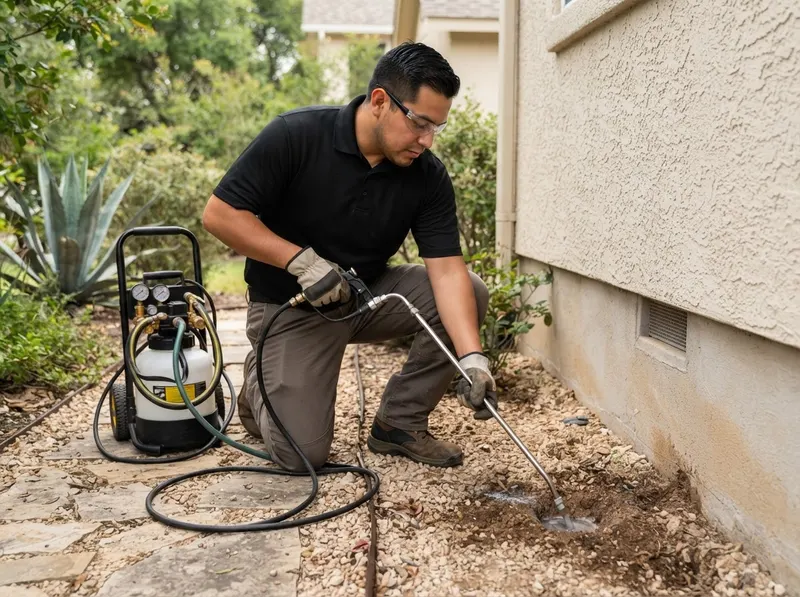
Subterranean termite defense addresses native subterranean termites and invasive Formosan colonies entering through foundation cracks, cold construction joints, expansion joints, and interior plumbing penetrations. Treatment involves establishing a continuous treated liquid barrier along the structural perimeter using trench-and-rod techniques down to the footing, excavating trenches 6 inches wide by 6 inches deep along exterior grade. Non-repellent liquid termiticide suspensions bind tightly to clay and limestone soil strata, remaining undetectable to foraging worker termites. Termites contacting the barrier inadvertently transfer the active insecticidal chemistry back to the central subterranean brood chamber via social grooming, neutralizing the entire colony without requiring demolition of interior drywall or flooring. Calibrated monitoring stations are placed every 10 to 15 feet around vulnerable structural borders to intercept foraging worker scouts before they encounter stem walls.
Get a quote →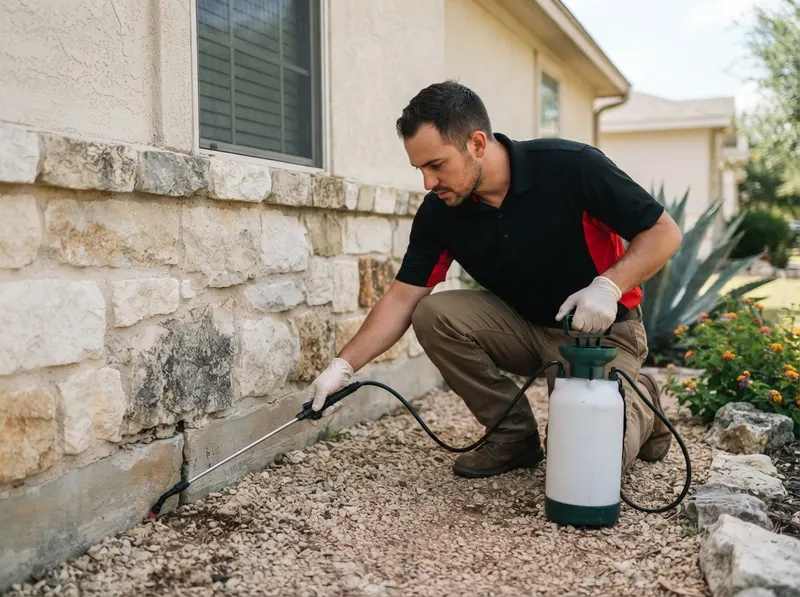
Scorpion mitigation protects residential interiors from striped bark scorpions (Centruroides vittatus) migrating from native limestone outcroppings, cedar brakes, and dry creek beds in northern Bexar County. Technicians install a continuous perimeter defense by applying microencapsulated pyrethroid suspensions 3 feet vertically up the foundation stem wall and 5 feet horizontally out onto adjacent landscape beds. These polymer capsules protect the active ingredient against breakdown from direct solar ultraviolet radiation and high soil alkalinity, ensuring scorpions traversing the defensive zone absorb lethal doses through their tarsi. Service includes physical exclusion utilizing corrosive-resistant copper mesh or stainless steel weep hole inserts, sealing foundation vents and expansion joints where scorpions enter cool wall cavities during prolonged 100-degree Fahrenheit summer heat waves.
Get a quote →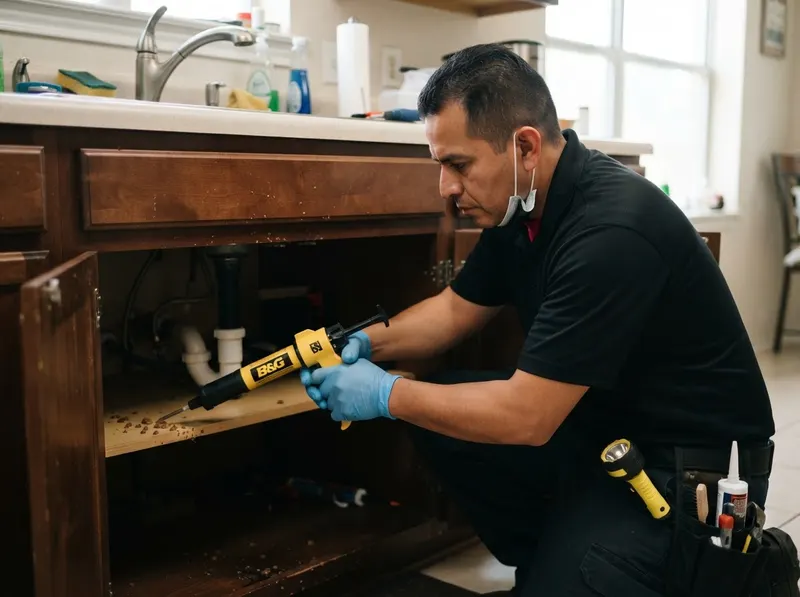
Cockroach remediation targets severe infestations across pantries, wet plumbing chases, crawlspaces, and commercial-grade home kitchens. Eradication of indoor German cockroaches relies on precision micro-baiting utilizing insect growth regulators (IGRs) combined with dry void dusting along electrical service panels, cabinet hinge mortises, and structural voids beneath appliances. Insect growth regulators disrupt the juvenile chitin synthesis process, preventing nymphs from molting into viable reproductive adults. Outdoor American and smokybrown wood roaches are intercepted via exterior water-resistant granular baits distributed across mulch beds, landscape timber retaining walls, irrigation valve boxes, and air conditioning condensate drain lines before they traverse door thresholds and garage seals into conditioned living quarters.
Get a quote →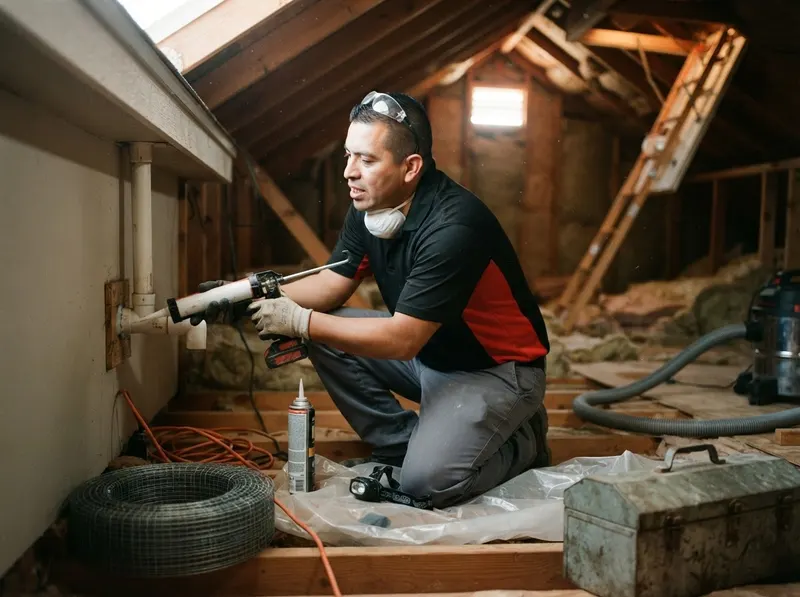
Rodent remediation eliminates roof rats (Rattus rattus) and house mice nesting within insulation, attic rafters, drop ceilings, and crawlspaces. The service begins with structural exclusion, sealing all external openings larger than 1/4 inch using 16-gauge galvanized steel hardware cloth, metal flashing, and high-density polyurethan-based expanding structural foam across roof eaves, gable vents, tile roof pan openings, and AC refrigerant pipe chases. Interior remediation deploys strategic mechanical trapping networks, followed by manual carcass removal, extraction of gnawed or contaminated loose-fill insulation, and localized HEPA-filtered sanitization using broad-spectrum enzymatic disinfectants to eliminate pheromone scent trails, droppings, and urine odors that attract foreign rodent colonies.
Get a quote →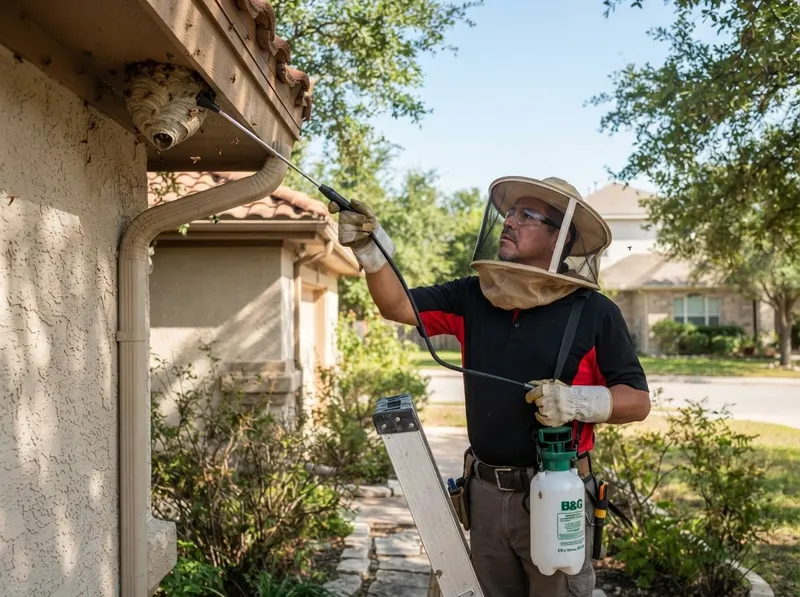
Wasp control removes aggressive red paper wasps, European paper wasps, yellow jackets, and mud daubers establishing colonies beneath exterior soffits, second-story window cornices, structural fascia boards, and patio covers. Technicians deploy targeted pressurized knockdown applications utilizing rapid-acting botanical or pyrethroid concentrates, immediately paralyzing airborne stinging populations and neutralising nest defense reflexes. Technicians physically scrape down and remove papery or mud-constructed nest clusters up to two stories high, followed by direct residual applications of microencapsulated repelling deterrents onto overhang surfaces to prevent returning fertile foundress queens from establishing new satellite nests during peak spring and late summer periods.
Get a quote →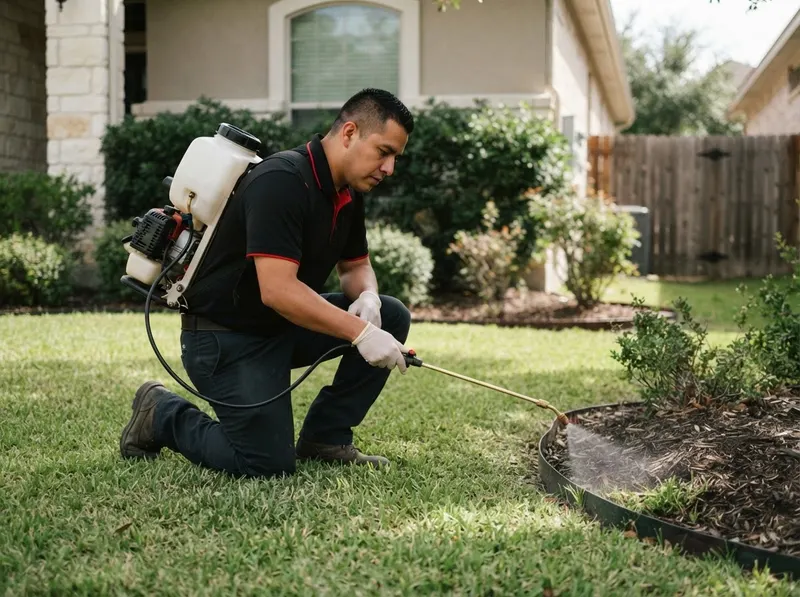
Perimeter lawn demarcation controls brown dog ticks, lone star ticks, cat fleas, and deer ticks harbored in shaded turf, leaf litter, and perimeter pet runs. Technicians execute low-pressure hydraulic broadcast applications using outdoor adulticides combined with photo-stable juvenile hormone analogues across shaded perimeter zones, foundational landscape beds, under deck structures, and beneath broadleaf shrubs. The multi-chemistry approach eliminates active adult biters within 2 to 4 hours while preventing unhatched flea eggs and tick larvae from completing their metamorphic lifecycle. This targeted approach significantly mitigates zoonotic disease vectors, including Lyme disease and murine typhus, safeguarding family pets and outdoor living areas.
Get a quote →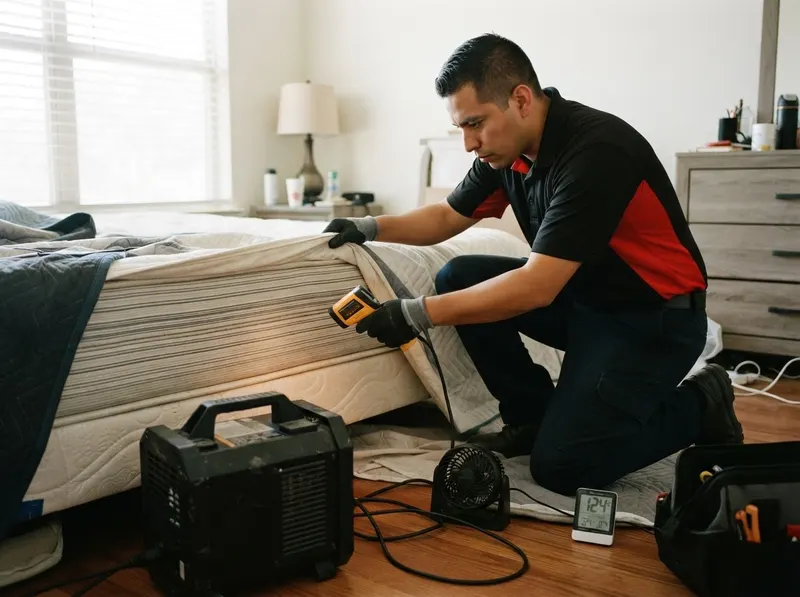
Thermal remediation clears acute Cimex lectularius infestations within mattresses, box springs, headboards, nightstands, wall baseboards, and window trim. Industrial high-output convection heating systems circulate superheated air through ducting to elevate ambient room temperatures to an exact target between 122 and 135 degrees Fahrenheit, sustaining this environment for a minimum of 4 hours. This convective heat penetrates deep into hollow furniture legs, wall cavities, and mattress seams, reaching lethal thermal death points for adult bed bugs, nymphs, and unhatched eggs without damaging structural electronics or furniture. Post-treatment protocols include targeted residual desiccant dust applications inside electrical receptacles to provide long-term protection against reintroduction.
Get a quote →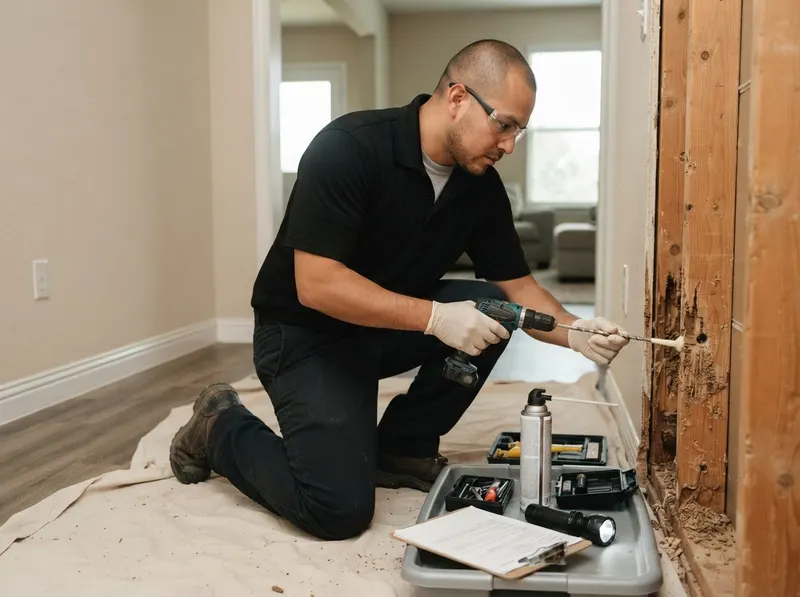
Carpenter ant structural remediation neutralizes wood-destroying Camponotus colonies excavating extensive nesting galleries inside wall studs, window framing, subfloors, and moisture-compromised structural wood. Technicians locate primary satellite nests using non-destructive acoustic detection and thermal imaging before injecting low-pressure synthetic pyrethroid dusts directly into wall cavities and plumbing chases. Exterior foraging trails originating from mature live oaks and cedar elms overhanging rooflines are intercepted with specialized sweet and protein-based non-repellent perimeter gel baits, which worker ants carry back to feed subterranean parent queens, collapsing the colony structure without extensive drywall alteration.
Get a quote →You get a firm, itemized quote for your pest control service before any work begins, no surprises, no pressure.
Careful prep, tidy work, and a full cleanup when we are done. We treat your home and belongings like our own.
The same trusted, background-checked team from the first call to the final check.
Selecting pest remediation in Bexar County requires matching application methods to structural architecture, building age, and targeted insect biology. For properties experiencing active subterranean termites, formosan termite colonies, or carpenter ants compromising structural load-bearing framing, continuous trench-and-rod liquid soil barriers using non-repellent termiticides or monitored subterranean bait networks provide colony-level elimination through social transfer chemistry. These formulations remain undetectable to foraging workers, allowing the active agent to circulate directly into the subterranean queen chamber within 14 to 90 days.
For homes facing periodic seasonal incursions of striped bark scorpions, American cockroaches, or wolf spiders entering across patio thresholds, quarterly microencapsulated exterior barrier bands applied 3 feet up the exterior stem wall and 5 feet out across surrounding soil stop perimeter migration before insects contact living quarters. The microcapsules protect active ingredients from ultraviolet photolysis during the intense San Antonio summer months, where surface temperatures on concrete and masonry routinely surpass 135 degrees Fahrenheit. The operational trade-off centers on upfront mechanical exclusion versus ongoing residual maintenance: structural sealing of exterior weep screeds, roofline soffits, and pipe entry points permanently blocks physical access for scorpions, roof rats, and house mice, but requires extensive initial ladder work, heavy-gauge wire mesh cutting, and customized sealing labor.
Conversely, chemical perimeter sprays require regular reapplication every 60 to 90 days to counter UV breakdown and soil dissipation during sustained triple-digit heat waves, yet demand lower initial capital. For pier-and-beam residences common to historic central neighborhoods, combining subfloor moisture remediation with physical wire screens produces durable defense, whereas monolithic slab foundations throughout master-planned northern developments require specialized mechanical weep vent covers combined with perimeter liquid soil saturation to prevent subterranean colonization.
Every project gets a firm, written price after a free on-site visit. Ranges below for orientation.
Tell us about your pest control service job and we'll send a clear, written quote, usually the same day. Or just call and talk to a real San Antonio pro.
(726) 232-6773
Properties built over northern Bexar County limestone fault zones, extending through Stone Oak, The Dominion, and Helotes Creek along the Loop 1604 corridor, encounter dense populations of striped bark scorpions, black widow spiders, and subterranean termites migrating through fractured rock strata directly into slab perimeters. In historic central districts containing pier-and-beam architecture like King William, Monte Vista, and Alamo Heights, elevated subfloor humidity beneath aged timber foundations creates ideal nesting chambers for wood-boring powderpost beetles, carpenter ants, and American cockroaches seeking moisture during South Texas summer droughts. Proximity to natural drainage channels, unpaved alleyways, and landmark corridors such as the San Antonio River Walk, Brackenridge Park, and the Pearl District leads to continuous roof rat and Norway rat movement along subterranean utility pathways. Shifting Houston Black clay soils across eastern and southern Bexar County cause seasonal structural settlement cracks in concrete slabs, forming direct 1/32-inch access avenues for subterranean termite foraging tubes and odorous house ants. Effective property protection demands mechanical weep-hole screening, custom heavy-gauge galvanized mesh over soffits, and microencapsulated soil-binding barriers engineered specifically to endure local limestone alkalinity, high clay contraction, and sustained triple-digit ambient heat.
Free estimates for San Antonio & the surrounding area.
 BugBoundary Pest Control