San Antonio's location along the Balcones Escarpment creates prime habitat for the striped bark scorpion (*Centruroides vittatus*). Neighborhoods characterized by limestone cuts, mature live oaks, and shifting caliche…
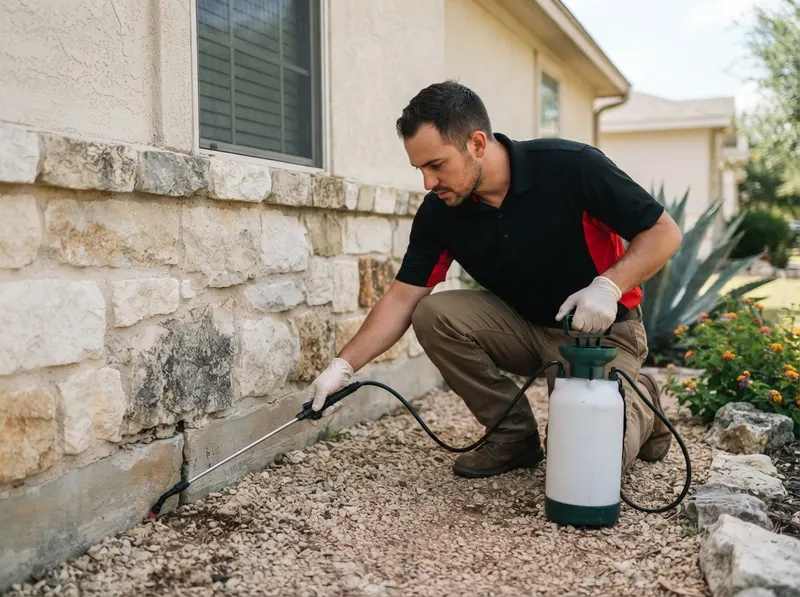
San Antonio's location along the Balcones Escarpment creates prime habitat for the striped bark scorpion (*Centruroides vittatus*). Neighborhoods characterized by limestone cuts, mature live oaks, and shifting caliche soils, such as Stone Oak, The Dominion, and Helotes Creek, experience significant scorpion pressure when summer temperatures exceed 95 degrees Fahrenheit. Scorpions seek indoor humidity and cooler living spaces, penetrating structures through weeping mortar voids, foundation fissures, unsealed pipe penetrations, and loose siding transitions. Traditional surface sprays degrade rapidly under high ultraviolet radiation and direct concrete temperatures. Microencapsulated polymer formulations protect the active insecticide inside microscopic porous capsules, allowing the treatment to withstand alkaline limestone runoff and extended heat exposure for up to 90 days.
Physical exclusion serves as the first line of defense. A striped bark scorpion requires an opening of only 1/16 inch, the thickness of a credit card, to slip into a wall void. Copper mesh or breathable weep hole inserts prevent entry through brick foundations without trapping interior moisture or compromising wall ventilation. Silicone-based seals along expansion joints, hose bibbs, and soffit edges deny vertical access across the stucco and stone facades typical of Monte Vista and Alamo Heights properties. If a property backs up to dry limestone creek beds, physical exclusion paired with a wide liquid perimeter barrier is required to halt sustained migration; if a property is on an elevated pier-and-beam foundation in King William or Southtown, sub-floor crawlspace skirting and utility line collars require primary reinforcement.
Microencapsulated barrier chemistry provides mechanical transfer that targeting scorpions specifically requires. Because scorpions travel on elevated claws, their bodies rarely contact treated horizontal planes directly. Micro-beads cling electrostatically to the pest's walking legs and ventral surface during traversal. The active ingredient releases slowly over weeks, penetrating the thick chitinous exoskeleton where standard diluted emulsions fail. Treating a 3-foot vertical band up the foundation wall and a 10-foot horizontal band across the adjacent perimeter turf creates an unbroken perimeter zone. The workflow follows three steps: first, an exterior envelope inspection to map thermal entry points and weep slots; second, physical installation of mechanical pest blockers and masonry sealants; third, perimeter deployment of microencapsulated chemistry, applied without locked annual commitments.
Every job gets a firm, written price after a free on-site visit.
Tell us about your striped bark scorpion exclusion and microencapsulated barrier job in San Antonio and we'll send a clear, written quote, usually the same day.
 BugBoundary Pest Control