Carpenter ants do not ingest structural wood like subterranean termites; instead, Camponotus species excavate smooth galleries inside damp or soft lumber to shelter rearing brood. In historic timber structures…
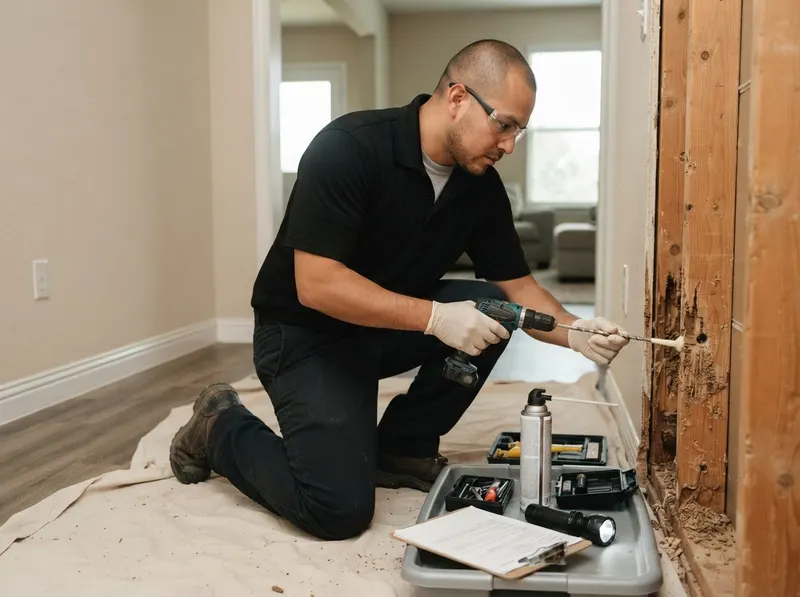
Carpenter ants do not ingest structural wood like subterranean termites; instead, Camponotus species excavate smooth galleries inside damp or soft lumber to shelter rearing brood. In historic timber structures throughout Monte Vista, King William, and Alamo Heights, older pine and cedar framing exposed to attic humidity or gutter overflows often host multi-tiered satellite nests. These satellite galleries maintain constant transit lines to mature parent colonies frequently rooted outside in decaying live oaks, native cedar elms, or landscape ties. Spot-treating visible foragers using over-the-counter surface sprays fails to neutralize the colony because repellent active ingredients trigger defensive gallery splitting, spreading satellite clusters deeper into structural framing.
A single mature carpenter ant colony can contain 10,000 to 50,000 workers organized into autonomous foraging lines. In slab-on-grade builds common to Stone Oak, The Dominion, and Helotes Creek, structural infestations typically follow hidden moisture tracks: leaking shower pans, AC condensation lines in exterior wall chases, or subfloor seals under exterior doors. When satellite colonies take hold behind drywall or beneath insulation, foraging activity becomes nocturnal, dropping coarse wood shavings, known as frass, from baseboards or plumbing penetrations around kitchens and crawlspaces.
Remediation pairs non-repellent transfer chemistry with targeted void injections rather than broad indoor broadcast applications. Non-repellent active formulations remain undetectable to foraging workers, who carry the dose back to deep nesting galleries where mutual grooming distributes the compound to queens and developing larvae. Treatment steps proceed through an orderly sequence: 1. Technicians identify moisture anomalies and acoustic gallery sounds behind walls; 2. Micro-injection probes treat sealed wall voids directly; 3. Non-repellent transfer chemistry applies to external foundation perimeters up to 2 feet high; 4. Overhead tree branches bridging rooflines are identified for structural clearance. Interior products dry completely within 60 to 90 minutes, allowing families and pets to resume normal use without lingering chemical odors.
Every job gets a firm, written price after a free on-site visit.
Tell us about your carpenter ant structural remediation job in San Antonio and we'll send a clear, written quote, usually the same day.
 BugBoundary Pest Control