In South Texas, extreme overhead temperatures drive structural pest pressures straight down into home interiors. In residential pockets from Monte Vista to Alamo Heights and Stone Oak, attic rafters routinely exceed…
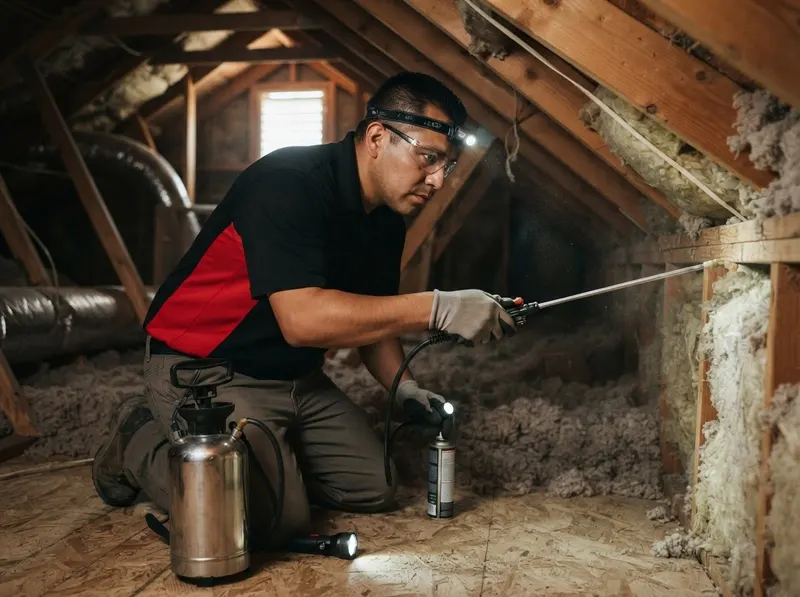
In South Texas, extreme overhead temperatures drive structural pest pressures straight down into home interiors. In residential pockets from Monte Vista to Alamo Heights and Stone Oak, attic rafters routinely exceed 120 degrees Fahrenheit during summer months. While ordinary silverfish favor damp, cool baseboards and foundation perimeters, firebrats thrive in dry attic temperatures between 90 and 106 degrees. Over-the-counter liquid sprays fail in this environment because heat breaks down standard pyrethroid barriers within days, leaving insulation voids open to continuous breeding. Physical barrier treatments utilize amorphous silica aerogel and micronized boric dust injected under high pressure through insulation down to the ceiling drywall plates and attic soil interfaces, desorbing moisture directly from the pests upon physical contact.
Decision-fit for attic void remediation depends on where activity surfaces. If silverfish are isolated strictly to a wet under-sink vanity or concrete slab line, localized gel baiting or moisture reduction suffices. When insect sightings occur along second-story crown molding, recessed lighting fixtures, or bedroom closets in neighborhoods like The Dominion and Terrell Hills, an attic harborage has formed. The physical trade-off involves access vs. broad-spectrum disturbance: specialized void treatment targets the unseen reservoir without broadcast-spraying wet chemicals across open living spaces or pantries, keeping bedrooms clean while establishing a multi-year protective barrier within the structural overhead envelope.
Technicians navigate historic and modern roofs alike, from crawlspaces in King William and Southtown to steep-pitch builds near Helotes Creek and the Medical Center. The dust formulation does not off-gas, does not dissolve in persistent summer dry heat, and maintains structural integrity around air handlers and duct runs. Treatment creates a fortified line of demarcation that stops paper-feeding insects from compromising stored keepsakes, drywall gypsum, and linen storage below.
Every job gets a firm, written price after a free on-site visit.
Tell us about your silverfish and firebrat attic soil treatment job in San Antonio and we'll send a clear, written quote, usually the same day.
 BugBoundary Pest Control